

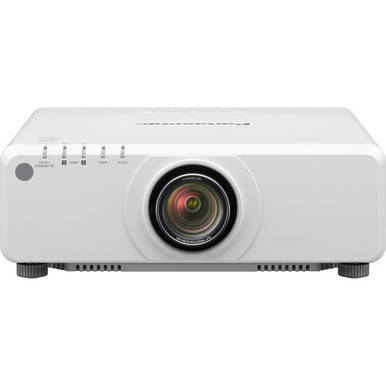
Panasonic PT-DX820WU vs PT-EX16KU: Which Projector Should You Choose? Start with stated brightness. The comparison pairs an 8,200-lumen XGA projector with a 16,000-lumen XGA projector. Both have the same documented resolution, so this is not a resolution upgrade. The choice turns on the light level and image size your room requires, followed by the mounting, lens, signal, and service details your team confirms before purchase.
That distinction matters for churches, schools, and conference rooms. A higher lumen specification may fit a more demanding projection plan, but it does not establish image quality, screen suitability, or installed performance by itself. Buyers still need verified throw geometry, connections, physical requirements, and control details.
This guide compares the documented facts, connects them to real deployment questions, and explains how to check live commerce details on each linked product page. It also introduces a 5,200-lumen WUXGA ultra-short-throw option for projects where resolution or projector placement changes the brief.
Products at a Glance
- Option 1: Panasonic PT-DX820WU 8200-Lumen XGA DLP Projector with Lens (White)
- For projects that require a 16,000-lumen specificatio…: Panasonic PT-EX16KU XGA LCD Projector
- For projects that require WUXGA and ultra-short-throw…: Panasonic PT-CMZ50 WUXGA Ultra-Short Throw Laser Projector – Professional Golf Simulator Display
Quick Comparison Table
| Feature | Panasonic PT-DX820WU 8200-Lumen XGA DLP Projector with Lens (White) | Panasonic PT-EX16KU XGA LCD Projector | Panasonic PT-CMZ50 WUXGA Ultra-Short Throw Laser Projector – Professional Golf Simulator Display |
|---|---|---|---|
| Brightness | 8200 lumens | 16,000 lumens | 5200 lumens |
| Resolution | XGA | XGA | WUXGA |
| Best For | Teams whose projection calculations call for an 8,200-lumen XGA projector and who can validate every installation detail before ordering. | Projects that require a 16,000-lumen specification while retaining XGA resolution, subject to a complete room and installation review. | Projects that require WUXGA and ultra-short-throw placement and whose room calculation confirms that 5,200 lumens is sufficient. |
| Throw Type | Ultra short throw | ||
| Recommended Buyer | Teams whose projection calculations call for an 8,200-lumen XGA projector and who can validate every installation detail before ordering. | Projects that require a 16,000-lumen specification while retaining XGA resolution, subject to a complete room and installation review. | Projects that require WUXGA and ultra-short-throw placement and whose room calculation confirms that 5,200 lumens is sufficient. |
Product Images
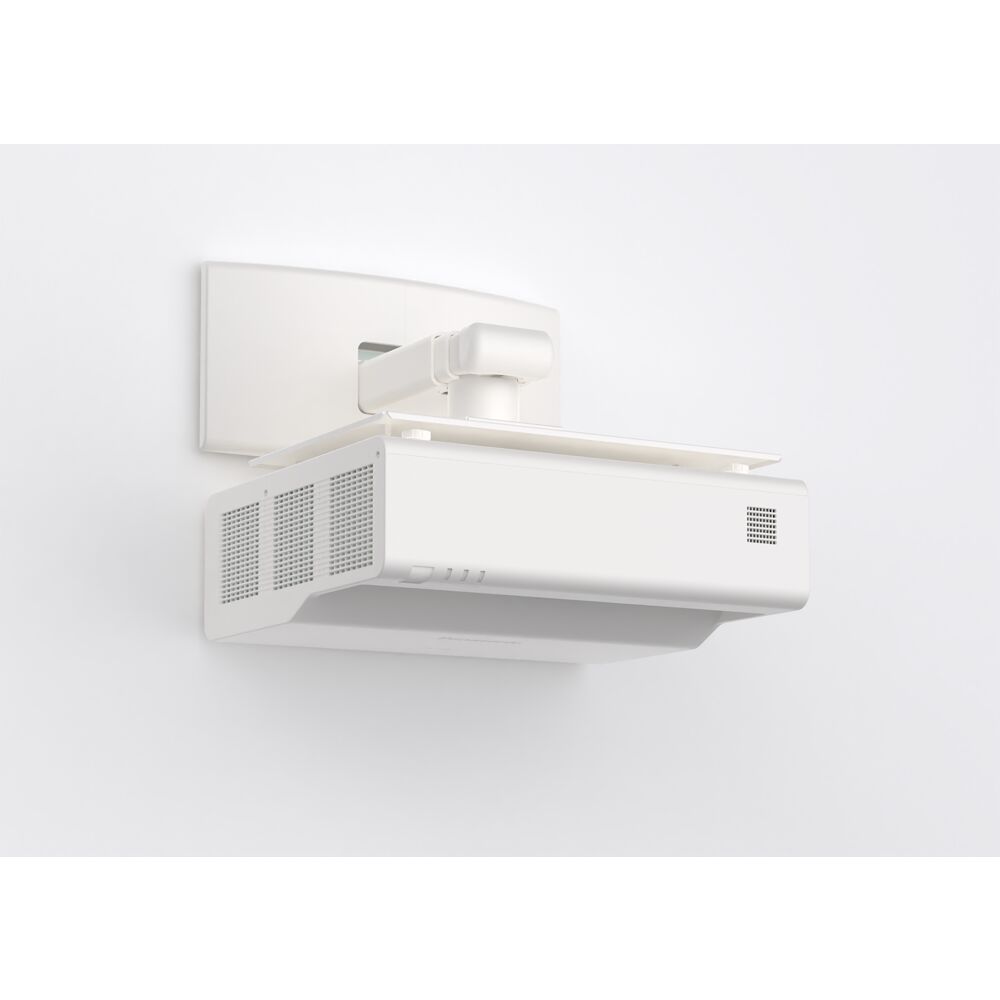
Projector Options from AudioVideoNation
1. Panasonic PT-DX820WU 8200-Lumen XGA DLP Projector with Lens (White)
Who should compare it: Teams whose projection calculations call for an 8,200-lumen XGA projector and who can validate every installation detail before ordering.
Why it belongs here: The PT-DX820WU is one of the two projectors in the direct comparison. Its documented 8,200-lumen brightness and XGA resolution establish the lower-output option without changing the resolution class.
SKU: PT-DX820WU
Key Features
- 8,200-lumen documented brightness
- XGA resolution
- Exact ordering identifier: PT-DX820WU
Things to Consider
Confirm the lens and throw plan, supported signals, connections, control, mounting, power, physical clearances, included items, and live commerce details before ordering.
2. Panasonic PT-EX16KU XGA LCD Projector
Who should compare it: Projects that require a 16,000-lumen specification while retaining XGA resolution, subject to a complete room and installation review.
Why it belongs here: The PT-EX16KU supplies the higher documented brightness in the head-to-head comparison. Its 16,000-lumen specification creates a clear option for designs whose calculations exceed the PT-DX820WU's listed output.
SKU: PT-EX16KU
Key Features
- 16,000-lumen documented brightness
- XGA resolution
- Exact ordering identifier: PT-EX16KU
Things to Consider
Higher listed brightness does not settle image quality, throw, integration, or project value. Verify the complete optical, physical, signal, control, power, service, and commerce requirements for this SKU.
3. Panasonic PT-CMZ50 WUXGA Ultra-Short Throw Laser Projector – Professional Golf Simulator Display
Who should compare it: Projects that require WUXGA and ultra-short-throw placement and whose room calculation confirms that 5,200 lumens is sufficient.
Why it belongs here: The PT-CMZ50U adds a distinct alternative when WUXGA resolution or ultra-short-throw placement matters more than staying within the XGA comparison. Its documented brightness is 5,200 lumens.
SKU: PT-CMZ50U
Key Features
- 5,200-lumen documented brightness
- WUXGA resolution
- Ultra-short-throw design
- Exact ordering identifier: PT-CMZ50U
Things to Consider
Its listed brightness is below both head-to-head projectors, so recalculate the room requirement instead of treating WUXGA or ultra short throw as a substitute for required output. Confirm exact geometry, integration, mounting, power, and live commerce details.
Panasonic PT-DX820WU 8200-Lumen XGA DLP Projector with Lens (White) vs Panasonic PT-EX16KU XGA LCD Projector: Main Differences
- Choose Panasonic PT-DX820WU 8200-Lumen XGA DLP Projector with Lens (White) if Teams whose projection calculations call for an 8,200-lumen XGA projector and who can validate every installation detail before ordering..
- Choose Panasonic PT-EX16KU XGA LCD Projector if Projects that require a 16,000-lumen specification while retaining XGA resolution, subject to a complete room and installation review..
- Choose Panasonic PT-CMZ50 WUXGA Ultra-Short Throw Laser Projector – Professional Golf Simulator Display if Projects that require WUXGA and ultra-short-throw placement and whose room calculation confirms that 5,200 lumens is sufficient..
Panasonic PT-DX820WU vs PT-EX16KU at a glance
The core comparison is clear. The PT-DX820WU is listed at 8,200 lumens and XGA. The PT-EX16KU is listed at 16,000 lumens and XGA. That creates a 7,800-lumen gap between their stated brightness figures while resolution remains the same.
Treat those figures as design inputs. Investigate the PT-EX16KU when a qualified projection calculation calls for the higher output class. Keep the PT-DX820WU on the shortlist when 8,200 lumens satisfies the plan and the project has no documented need for the 16,000-lumen specification. Neither decision should rest on brightness alone.
Before approval, match the exact SKU to the project's throw, optical, signal, control, physical, electrical, and service requirements. Those checks can change whether a projector is viable even when brightness and resolution look right. Keep the sequence disciplined: confirm resolution, calculate required brightness, solve placement, and validate integration. This prevents a simple lumen comparison from standing in for an installation design.
Deployment fit for churches, schools, and conference rooms
Churches may need a large image while house or stage lighting remains on. Start with the planned image dimensions and measured light conditions. If the resulting requirement points to the 16,000-lumen class, the PT-EX16KU is the relevant candidate. If 8,200 lumens meets the documented target, the PT-DX820WU remains in scope. The room label alone cannot decide it.
Schools should put readability and placement near the top of the brief. Both comparison products are XGA, so selecting the higher lumen figure does not change their documented resolution. Review the actual lesson content, source devices, desired image size, mounting location, and control workflow before choosing.
Conference room teams should do the same for spreadsheets, diagrams, video calls, and presentation templates. A smaller room does not automatically need the lower-lumen projector, and a larger room does not automatically need the higher-lumen one. Screen material, image size, ambient light, and content affect the calculation.
Across all three settings, ask an installer to mark the projector position, image area, cable route, power location, and maintenance access on the project drawing. Then validate the exact SKU against that plan.
8,200 vs 16,000 lumens: projector brightness comparison
Listed lumens are a starting point, not an installed result. Ask the AV designer to calculate required output from the target image size, measured ambient light, screen characteristics, content, and the organization's viewing criteria. The calculation should use the actual room, not a generic venue label.
The PT-EX16KU's 16,000-lumen figure is 7,800 lumens above the PT-DX820WU's 8,200-lumen figure. That gap is substantial on paper. It still does not prove what either image will look like in your room, and the ratio should not be converted into an unsupported claim about perceived brightness or image quality.
Document the minimum acceptable target and the assumptions behind it. If both products meet that target, compare placement, integration, service planning, and current project cost. If only the 16,000-lumen specification clears the calculation, the brightness decision narrows, but every other installation check still applies. If 8,200 lumens is enough, buying extra listed output needs a clear project reason.
XGA projector comparison: resolution and content fit
Both head-to-head products are documented at XGA. Moving from the PT-DX820WU to the PT-EX16KU therefore provides no documented resolution change. Teams that need a different native resolution should separate that requirement from brightness and verify it explicitly.
Review actual content at the intended image size. Text size, spreadsheet density, diagrams, captions, and multi-window layouts can expose whether XGA matches the brief. Then confirm supported input signals and any scaling behavior on the exact product page or in the relevant manufacturer documentation before approving the design. Do not infer those capabilities from the resolution label alone.
If WUXGA is a firm requirement, the Panasonic PT-CMZ50U is the provided alternative that documents it. It is also listed at 5,200 lumens with an ultra-short-throw design. That creates a different set of tradeoffs rather than a direct upgrade from either XGA option. Recalculate brightness and placement from scratch instead of carrying assumptions over from the main comparison.
Throw distance, lens, and integration checks
The main comparison should pause until the installation variables are verified. Give the installer the exact SKU and ask for a written match to the design.
1. Confirm the required image size, projector-to-screen distance, lens configuration, focus range, and allowable image position.
2. Confirm signal inputs, supported formats, control connections, and how the projector will join the room's switching or automation plan.
3. Confirm dimensions, weight, mounting method, structural support, clearance, ventilation, power, and cable access.
4. Confirm operating access, maintenance plans, service terms, and any project-specific spare-parts needs.
5. Confirm what comes with the exact listing and identify every separately required component.
Do not treat a model-family document or similar SKU as proof. PT-DX820WU and PT-EX16KU are the ordering anchors in this comparison. A suffix difference can indicate a different regional or package configuration, so keep the exact identifier on drawings, quotes, approvals, and the purchase order. Once these checks are complete, the lumen and resolution comparison becomes part of a real system plan instead of an isolated product choice.
How to check stock, availability, and price-to-performance
Use each linked AudioVideoNation product page for current price and availability when you are ready to buy. Then confirm quantity, lead time, exact configuration, and order terms with the sales team. Placement in this article is not an inventory guarantee, and the copy cannot replace a live quote.
Price-to-performance only becomes meaningful after the required performance is defined. Compare the current quote with the projector's documented brightness and resolution, then add the verified costs of the complete installation. Depending on the project, that may include optical components, mounting or rigging, cabling, signal and control hardware, electrical work, screen changes, labor, and service coverage. Include only items the design requires.
If 8,200 lumens and XGA meet every validated need, paying for a higher brightness class may add no useful project value. If the room calculation requires 16,000 lumens, a lower current price on an 8,200-lumen option would not make that option suitable. Record the date of the quote and the assumptions behind the comparison. That creates an accountable purchasing decision without publishing a price or making a stock claim that can go stale.
A WUXGA ultra-short-throw alternative
The Panasonic PT-CMZ50U is documented at 5,200 lumens, WUXGA, and ultra short throw. Consider it when WUXGA or close projector placement is a firm design requirement. It is not a like-for-like substitute for the two XGA products because its documented brightness is lower and its throw category is different.
Ultra short throw does not remove the need for geometry checks. Confirm the precise mounting position and the image size available from that position. Run the same brightness calculation used for the main comparison. A short projection path cannot compensate for a lumen target the projector does not meet.
This option is worth evaluating for rooms with tight placement limits or designs that prioritize keeping the projector close to the image surface. If placement is flexible and XGA meets the content requirement, return to the main pair and let the validated output need guide the choice.
A practical projector decision path
A clean choice follows six gates.
1. Resolution: Decide whether XGA meets the content requirement. If it does not, neither head-to-head product satisfies that criterion. Evaluate the WUXGA alternative separately.
2. Brightness: Calculate the required output for the real image size, room lighting, screen, and content.
3. Placement: Confirm throw geometry, optical configuration, mounting position, clearances, and access.
4. Integration: Validate signals, connections, control, power, switching, and cable paths against the exact SKU.
5. Operations: Review maintenance access, service requirements, staff workflow, and any spare-parts plan.
6. Commerce: Check the linked product page and obtain live price, availability, lead-time, and configuration details.
Shortlist the PT-DX820WU when XGA meets the content brief, 8,200 lumens clears the calculation, and the exact-SKU checks pass. Shortlist the PT-EX16KU when XGA is acceptable and the design calls for its 16,000-lumen specification. Move to the PT-CMZ50U branch when WUXGA and ultra-short-throw placement are firm requirements and 5,200 lumens meets the room calculation. No single specification can complete the design review.
Related AudioVideoNation Links
- Browse Projector at AudioVideoNation
- View the Panasonic PT-DX820WU product page
- View the Panasonic PT-EX16KU product page
- Explore the Panasonic PT-CMZ50U alternative
Product Information Sources
- Panasonic PT-DX820WU 8200-Lumen XGA DLP Projector with Lens (White) product information
- Panasonic PT-EX16KU XGA LCD Projector product information
- Panasonic PT-CMZ50 WUXGA Ultra-Short Throw Laser Projector – Professional Golf Simulator Display product information
FAQ
Which projector is brighter, the Panasonic PT-DX820WU or PT-EX16KU?
The Panasonic PT-EX16KU has the higher documented brightness at 16,000 lumens, compared with 8,200 lumens for the PT-DX820WU. Use those figures in a room-specific projection calculation rather than treating them as a standalone quality ranking.
Do the PT-DX820WU and PT-EX16KU have the same resolution?
Yes, both the PT-DX820WU and PT-EX16KU are documented as XGA projectors. Moving between them changes the listed brightness, not the documented resolution, so content fit should be reviewed separately.
Is the PT-EX16KU automatically better because it has 16,000 lumens?
No, the PT-EX16KU is not automatically the better choice simply because its documented lumen figure is higher. The right choice depends on image size, ambient light, screen characteristics, throw geometry, integration needs, and current project economics.
Which projector should a church, school, or conference room choose?
A church, school, or conference room should choose between these projectors according to a validated brightness calculation and installation plan, not the venue label alone. Select the PT-EX16KU when the design requires its 16,000-lumen specification, or retain the PT-DX820WU when 8,200 lumens meets the requirement and all other checks pass.
Where can buyers check current price and availability?
Buyers should check the linked AudioVideoNation page for each exact SKU at the time of purchase for live price and availability information. Confirm quantity, lead time, configuration, and any required installation components before issuing a purchase order.
What should an installer verify before either projector is purchased?
An installer should verify image size, throw geometry, lens configuration, mounting, signal support, connections, control, power, dimensions, clearance, maintenance access, included items, and service requirements for the exact SKU. Record those details on the design and quote so the purchasing team can compare complete systems.
Conclusion
Use this Panasonic PT-DX820WU vs PT-EX16KU: Which Projector Should You Choose? comparison to match documented specifications to the room and installation requirements. Review the linked product pages for current purchase details before ordering.
Products Used
| SKU | Product Name | URL |
|---|---|---|
| PT-DX820WU | Panasonic PT-DX820WU 8200-Lumen XGA DLP Projector with Lens (White) | View product |
| PT-EX16KU | Panasonic PT-EX16KU XGA LCD Projector | View product |
| PT-CMZ50U | Panasonic PT-CMZ50 WUXGA Ultra-Short Throw Laser Projector – Professional Golf Simulator Display | View product |