

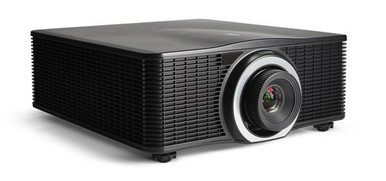
This AV G60-W10 Setup Guide and Buying Considerations article addresses the gap between a catalog listing and an installation-ready plan. The supplied data identifies the Barco G60-W10 at 10,200 lumens with WUXGA resolution. That is enough to start a room discussion, but it does not approve the optical configuration, mount, signal chain, power, control path, or accessory list.
This guide helps AV buyers, installers, churches, schools, and conference room teams turn those confirmed facts into a disciplined buying decision. You’ll learn how to assess deployment fit, plan a WUXGA source path, check stock and availability without relying on an old claim, and judge price-to-performance using total installed cost. It also separates the projector from two supplied catalog products that may attract attention during procurement but have no documented G60-W10 compatibility here. A similar SKU fragment or a projector-related category cannot replace written compatibility confirmation.
Products at a Glance
- Option 1: Barco G60-W10 10,000-Lumen WUXGA Laser DLP Projector
- For aV and IT teams that have independently confirmed…: Tripp Lite 12.6kW 200-240V 3-Phase IsoBreaker Managed PDU – Gigabit, 36
- For buyers evaluating wireless LAN hardware for an Ep…: Epson ELPAP07 Wireless LAN Module (V12H418P12)
Quick Comparison Table
| Feature | Barco G60-W10 10,000-Lumen WUXGA Laser DLP Projector | Tripp Lite 12.6kW 200-240V 3-Phase IsoBreaker Managed PDU – Gigabit, 36 | Epson ELPAP07 Wireless LAN Module (V12H418P12) |
|---|---|---|---|
| Brightness | 10,200 lumens | ||
| Resolution | WUXGA | ||
| Best For | Churches, schools, conference rooms, and installed AV projects whose verified room and image plan calls for a 10,200-lumen WUXGA projector. | AV and IT teams that have independently confirmed a need for a managed PDU within a qualified facility power design. | Buyers evaluating wireless LAN hardware for an Epson projector that is independently documented to accept ELPAP07. |
| Recommended Buyer | Churches, schools, conference rooms, and installed AV projects whose verified room and image plan calls for a 10,200-lumen WUXGA projector. | AV and IT teams that have independently confirmed a need for a managed PDU within a qualified facility power design. | Buyers evaluating wireless LAN hardware for an Epson projector that is independently documented to accept ELPAP07. |
Product Images
Projector Options from AudioVideoNation
1. Barco G60-W10 10,000-Lumen WUXGA Laser DLP Projector
Who should compare it: Churches, schools, conference rooms, and installed AV projects whose verified room and image plan calls for a 10,200-lumen WUXGA projector.
Why it belongs here: This is the focal product and the only supplied item with SKU G60-W10. Its extracted data confirms 10,200 lumens and WUXGA resolution, giving the project two firm planning anchors.
SKU: G60-W10
Key Features
- 10,200-lumen brightness in the supplied extracted facts
- WUXGA resolution in the supplied extracted facts
- SKU G60-W10 for order and submittal checks
- Listed in the Projectors category
Things to Consider
The supplied data does not include throw, lens, input, control, power, mounting, physical, or environmental details. Reconcile the brightness difference between the extracted fact and display name, then verify every missing installation requirement before ordering.
2. Tripp Lite 12.6kW 200-240V 3-Phase IsoBreaker Managed PDU – Gigabit, 36
Who should compare it: AV and IT teams that have independently confirmed a need for a managed PDU within a qualified facility power design.
Why it belongs here: Power distribution belongs in an installed AV bill of materials. This item is included for a separate infrastructure review, with no implied connection to the Barco G60-W10.
SKU: PDU3EVSR1G60
Key Features
- SKU PDU3EVSR1G60 for procurement tracking
- Listed in the Power Distribution category
- Cataloged as a managed PDU in the supplied product name
- Dedicated product page for current commerce details
Things to Consider
The supplied extracted facts and specs do not establish projector compatibility or facility fit. Do not infer a Barco connection from the G60 characters in its SKU. Verify the complete electrical, receptacle, load, phase, voltage, plug, rack, and code requirements with qualified personnel.
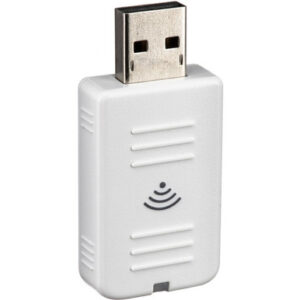
3. Epson ELPAP07 Wireless LAN Module (V12H418P12)
Who should compare it: Buyers evaluating wireless LAN hardware for an Epson projector that is independently documented to accept ELPAP07.
Why it belongs here: This supplied accessory highlights a key buying checkpoint: a projector-related category does not prove that an accessory works with the G60-W10.
SKU: ELPAP07
Key Features
- SKU ELPAP07 for compatibility and order checks
- Listed in the Accessories category
- Also listed in the Projectors category
- Cataloged as a wireless LAN module in the supplied product name
Things to Consider
The provided data does not connect this Epson product to the Barco G60-W10. Do not purchase it as a G60-W10 accessory unless authoritative documentation explicitly names that exact host and configuration.
Barco G60-W10 10,000-Lumen WUXGA Laser DLP Projector vs Tripp Lite 12.6kW 200-240V 3-Phase IsoBreaker Managed PDU – Gigabit, 36: Main Differences
- Choose Barco G60-W10 10,000-Lumen WUXGA Laser DLP Projector if Churches, schools, conference rooms, and installed AV projects whose verified room and image plan calls for a 10,200-lumen WUXGA projector..
- Choose Tripp Lite 12.6kW 200-240V 3-Phase IsoBreaker Managed PDU – Gigabit, 36 if AV and IT teams that have independently confirmed a need for a managed PDU within a qualified facility power design..
- Choose Epson ELPAP07 Wireless LAN Module (V12H418P12) if Buyers evaluating wireless LAN hardware for an Epson projector that is independently documented to accept ELPAP07..
Confirmed Barco G60-W10 specifications
The supplied input gives two usable design specifications for the Barco G60-W10: brightness of 10,200 lumens and WUXGA resolution. The catalog display name uses 10,000-Lumen, so the two supplied fields are not identical. Flag that difference during quote review and confirm current manufacturer documentation for SKU G60-W10 before signing off on the design.
Use WUXGA as the planned image baseline. It does not establish which incoming resolutions the projector accepts, how it scales them, or whether a protected source will pass through the complete system. Brightness is also one part of image planning. Screen size and material, ambient light, desired contrast, viewing distance, and content all affect the final design.
Several installation facts are absent: throw type and ratio, lens information, zoom and shift, connectors, control methods, electrical needs, mounting details, dimensions, weight, ventilation clearances, and acoustic data. Make each gap an approval gate. Gather the missing information from current documentation, then bind it to the quoted configuration and project drawings.
Plan G60-W10 deployment fit before purchase
Deployment fit starts with measurements. Record the proposed image dimensions, available projector-to-screen distance, lens-center location, ceiling height, structural attachment points, nearby obstructions, service access, and expected room lighting. The supplied data has no throw or lens details, so it cannot support a placement calculation by itself.
Church teams should map stage lighting, sightlines, and the location of projection surfaces. Schools should document existing mounts, teacher source connections, control points, and any restrictions on ceiling work. Conference room teams should account for camera framing, table sightlines, shared-content workflows, and access above the ceiling. Installers need the same room facts plus a clear service path.
Do not use the 10,200-lumen figure as permission to skip an ambient-light study. Confirm the required image size and viewing conditions, then use verified optical data to test candidate placements. If the optical configuration cannot create the intended image from the available position, change the design before ordering. Moving a mount, screen, conduit, or electrical point after installation can distort the price comparison and the schedule.
A safe Barco G60-W10 setup sequence
Use a gated setup sequence so unresolved assumptions do not reach the installation crew.
- Confirm identity. Put product ID 17697 and SKU G60-W10 on the quote, purchase order, submittal, and receiving checklist.
- Reconcile the brightness wording. The extracted fact says 10,200 lumens, while the display name says 10,000-Lumen. Obtain one approved reference for the project file.
- Collect current documentation. Verify the optical configuration, installation limits, mounting requirements, electrical data, clearances, connectors, and control options.
- Freeze image geometry. Calculate placement with the documented optical information for the exact configuration. Check the full image area, lens-center position, obstructions, and service access.
- Approve the mounting plan. Confirm the projector’s documented physical requirements, mounting interface, supporting structure, and installer access before selecting hardware.
- Approve power and environment. A qualified team should validate electrical service, grounding, ventilation, operating orientation, and local code requirements from authoritative documentation.
- Build the complete signal path. Include sources, switching, scaling, extension, control, and cabling where the project requires them. Verify every connection rather than assuming a port or protocol exists.
- Stage and commission. Test the documented source formats and control workflow before final mounting when the project allows it. After installation, record settings, cable routes, identifiers, and approved configuration details.
This order keeps procurement, engineering, and field work tied to the same product identity. Follow manufacturer safety instructions and applicable codes throughout the installation.
Build the WUXGA signal and control path
The source path needs one documented target format. WUXGA is confirmed for the projector, but the supplied facts do not list input connections, accepted signal formats, scaling behavior, copy-protection support, network functions, audio capabilities, or control protocols. Do not infer any of them.
Inventory each source first. A church may use presentation or lyric content. A classroom may rely on instructor computers and other teaching sources. A conference room may combine room computing with guest presentation equipment. For each source, document its output, the intended content format, and every switcher, scaler, extender, wall plate, adapter, and cable between it and the projector.
Then test the chain as one system. WUXGA resolution alone does not prove that a particular higher-resolution input will be accepted or scaled as intended. It also does not establish wireless presentation or built-in audio. Confirm those functions separately, using the exact projector configuration and every intermediary device. Test representative content before handoff so aspect handling, text legibility, switching, and control behavior can be reviewed in the real workflow.
Handle stock and availability as a project dependency
Check the linked G60-W10 product page when you are ready to quote because stock and availability can change. Record the date, exact SKU, quoted configuration, and any stated fulfillment timing in the procurement file. Repeat the check before committing installation labor or a room shutdown.
Coordinate the projector with every required, independently verified component. That may include an optical configuration, mounting hardware, signal transport, control interfaces, cables, and electrical work, depending on the approved design. One missing dependency can hold the entire installation even when the main product is available.
For phased school, church, or enterprise deployments, define a substitution rule before ordering. Any substitute should pass the same geometry, brightness, resolution, signal, control, power, mounting, and service checks. The supplied product array does not contain another projector with enough confirmed specifications for a responsible G60-W10 substitute recommendation.
Judge projector price-to-performance by installed cost
Price-to-performance starts with a pass-or-fail question: can the documented configuration create the required image in the actual room? If throw geometry, mounting, or signal support remains unresolved, a purchase-price comparison is premature.
Use the linked page for current commerce details, then build a total installed-cost worksheet. Include only applicable, verified costs such as the optical configuration, mount and structural work, electrical work, cabling, signal extension, switching, control, installation labor, commissioning, training, and support. Keep assumptions on separate lines so decision-makers can see which costs still need confirmation.
Compare the confirmed 10,200-lumen brightness and WUXGA resolution with the project’s written requirements. Extra capability has value only when the room or content plan calls for it. A lower initial price can lose its advantage if the alternative forces a screen change, mount relocation, signal-system redesign, or extra labor.
Do not assign savings for energy use, service life, lamp replacement, maintenance, warranty coverage, or reliability. The supplied facts do not support those comparisons. Ask competing vendors to document the same fields before placing alternatives in the worksheet.
Keep accessories and power products in their proper roles
The supplied products have different roles. The Barco G60-W10 is the projector under consideration. The Tripp Lite PDU is listed under Power Distribution, while the Epson ELPAP07 appears under Accessories and Projectors. Neither secondary product has supplied facts establishing compatibility with the G60-W10.
Pay close attention to the Tripp Lite SKU PDU3EVSR1G60. Its G60 text does not connect it to the Barco model. Treat it only as a separate managed-PDU candidate if a qualified power design calls for one and its full electrical, receptacle, rack, and facility requirements are independently verified.
Apply the same discipline to the Epson ELPAP07. Its catalog name identifies an Epson wireless LAN module, but no supplied documentation links it to the Barco projector. Do not place it on the G60-W10 bill of materials without authoritative confirmation for the exact host product.
For every accessory, record its role, exact SKU, host product, compatibility source, and approval status. Shared terminology, a similar code, or placement in a projector-related category is not compatibility evidence.
Use a final AV procurement signoff
Approve the purchase only after the project team can answer these questions with documented facts:
- Is SKU G60-W10 shown across the quote, design, and purchase order?
- Has the 10,200-lumen extracted fact been reconciled with the 10,000-Lumen display name?
- Does verified optical information support the required image from the available location?
- Are mounting, structural, electrical, ventilation, and service requirements approved?
- Has every source-to-projector signal and control step been verified?
- Are accessory relationships documented for the exact products involved?
- Were live stock and availability checked near the order date?
- Does the price-to-performance worksheet include the full installed scope?
If an answer is missing, leave it open in the signoff record. That small discipline prevents an unsupported assumption from becoming an expensive field change.
Related AudioVideoNation Links
- Browse Projector at AudioVideoNation
- View Barco G60-W10 product details
- Review Tripp Lite managed PDU product details
- Review Epson ELPAP07 product details
Product Information Sources
- Barco G60-W10 10,000-Lumen WUXGA Laser DLP Projector product information
- Tripp Lite 12.6kW 200-240V 3-Phase IsoBreaker Managed PDU – Gigabit, 36 product information
- Epson ELPAP07 Wireless LAN Module (V12H418P12) product information
FAQ
What G60-W10 specifications are confirmed in the supplied product data?
The supplied product data confirms 10,200 lumens of brightness and WUXGA resolution for the Barco G60-W10. The display name uses 10,000-Lumen, so buyers should reconcile that wording against current documentation for SKU G60-W10.
Can I calculate the G60-W10 throw distance from this data?
No, the supplied data does not include throw type, throw ratio, or lens information, so it cannot support a placement calculation. Use current optical documentation for the exact configuration and the measured room dimensions.
Is the Epson ELPAP07 compatible with the Barco G60-W10?
The provided data does not establish compatibility between the Epson ELPAP07 and the Barco G60-W10. Purchase it only for a host projector that authoritative documentation explicitly identifies as compatible.
Is the Tripp Lite PDU3EVSR1G60 required for the G60-W10?
The supplied data does not establish the Tripp Lite PDU3EVSR1G60 as required or compatible with the Barco G60-W10. Its SKU text is not proof of a relationship, so evaluate it only within a separately verified power-distribution design.
How should buyers check the projector’s price and availability?
Buyers should use the linked product page for live price and availability at the time of quotation. Record the check date and exact SKU, then confirm again before scheduling installation labor.
What should be approved before ordering the G60-W10?
Approve the exact SKU, reconciled brightness data, WUXGA requirement, optical geometry, mounting plan, electrical and environmental needs, signal and control path, accessory compatibility, and total installed cost before ordering. Most installation details are absent from the supplied facts and require current documentation.
Conclusion
Use this AV G60-W10 Setup Guide and Buying Considerations comparison to match documented specifications to the room and installation requirements. Review the linked product pages for current purchase details before ordering.
Products Used
| SKU | Product Name | URL |
|---|---|---|
| G60-W10 | Barco G60-W10 10,000-Lumen WUXGA Laser DLP Projector | View product |
| PDU3EVSR1G60 | Tripp Lite 12.6kW 200-240V 3-Phase IsoBreaker Managed PDU – Gigabit, 36 | View product |
| ELPAP07 | Epson ELPAP07 Wireless LAN Module (V12H418P12) | View product |