SUMMER SPECIAL — shop now
SHIPPING OPTIONS shown at checkout
Call us: (800) 581-6868
WARRANTY TERMS vary by product
OPEN BOX DEALS - savings vary by item
PAYMENT OPTIONS shown at checkout
GET $10 OFF $100+ — join our email list

Your Cart
Your cart is empty
Looks like you haven't added anything yet.
Product Overview
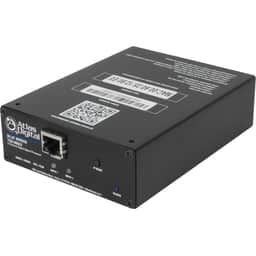
The AtlasIED TSD-BB22 is a compact 2-input, 2-output digital signal processor with GUI-selectable mic or line inputs, 48V phantom power, and line outputs. It supports a +20dBu maximum input signal, 20Hz-20kHz frequency response, 5ms latency, selectable polarity, and 0.
Shipping charges and warranty coverage vary by product and order. Review the applicable terms before purchase.
Available to order; contact us to confirm lead time
Rates and available methods are shown at checkout
Key Features
The AtlasIED TSD-BB22 is a 2-input by 2-output digital signal processor designed to place substantial signal-processing capability in a very small chassis. Its two inputs can be selected as microphone or line sources through the GUI, while its two outputs operate at line level. With a chassis measuring 4 inches wide by 5.2 inches deep and weighing 6 ounces, it offers a focused audio-processing option for locations where available installation space is limited.
This model fits systems that require two audio inputs and two line outputs without a large processor enclosure. The selectable mic-or-line input configuration allows it to accommodate either source type through GUI selection. It is also suited to microphone applications requiring 48V phantom power, which is enabled through the GUI. A maximum input signal of +20dBu supports connection of appropriately matched audio sources, while selectable polarity provides another configuration control for integration.
The TSD-BB22 brings its core settings into a GUI-selectable workflow. Input type, polarity, and phantom power are all identified as GUI controlled, reducing dependence on fixed hardware-only choices. Its compact size is central to the model: the source describes the chassis as easily installed nearly anywhere. Despite that footprint, it provides two inputs, two outputs, electronically balanced gain configuration in 0.25dB steps, and stated performance figures covering response, latency, common-mode rejection, and distortion.
Plan connections around two mic-or-line inputs and two line outputs. Because input mode is selectable, each connected source should be matched to the required microphone or line setting in the GUI. Phantom power should likewise be enabled only when the connected microphone requires 48V power. Polarity can be set to positive or negative through the GUI. The line outputs have a stated output impedance of 50Ω. The supplied data lists electronically balanced gain from 40 to +15dB in 0.25dB steps; installers should use that published range as written when establishing gain structure. Physical planning should allow for the 4-inch width and 5.2-inch depth. No height, mounting method, power consumption, voltage, or operating-temperature information is provided.
Published frequency response spans 20Hz to 20kHz, covering the stated audio band for the processor. Latency is specified at 5ms. CMRR is greater than 100dB from 50Hz to 10kHz, and distortion is specified at 0.002%, measured at 1kHz with a +4dBu signal. Maximum input signal is +20dBu. Together, these values give system designers concrete reference points for bandwidth, timing, common-mode rejection, and distortion performance when evaluating the processor for a two-channel input and output path. The data also lists a 20Hz refresh rate, presented separately from the audio frequency-response specification.
What distinguishes this model is the concentration of a 2-by-2 DSP format, selectable input modes, and GUI-enabled controls in a chassis only 4 inches wide and weighing 6 ounces. Rather than limiting the inputs to a single source class, the unit allows microphone or line selection. The inclusion of GUI-enabled 48V phantom power makes the processor adaptable to compatible microphones, while GUI-selectable polarity adds configuration flexibility. Its external power supply carries cUL, CE, RoHS, and TUV safety and certification listings according to the supplied specifications.
The TSD-BB22 is a concise choice when the requirement is specifically two selectable mic-or-line inputs, two line outputs, and DSP processing in a compact enclosure. Its published 20Hz to 20kHz response, 5ms latency, +20dBu maximum input signal, and measured distortion specification make its operating parameters clear. A 36-month warranty from the date of purchase completes the stated package. For projects that need other channel counts, connectivity types, or mounting details, those capabilities are not identified in the provided product data.
No approved reviews yet for this product.
No approved reviews are available yet for this product.
Checking whether your account is eligible to review this product...
Coverage varies; confirm the terms before purchase
30-day window; conditions and exclusions apply
Condition and specifications are shown per listing